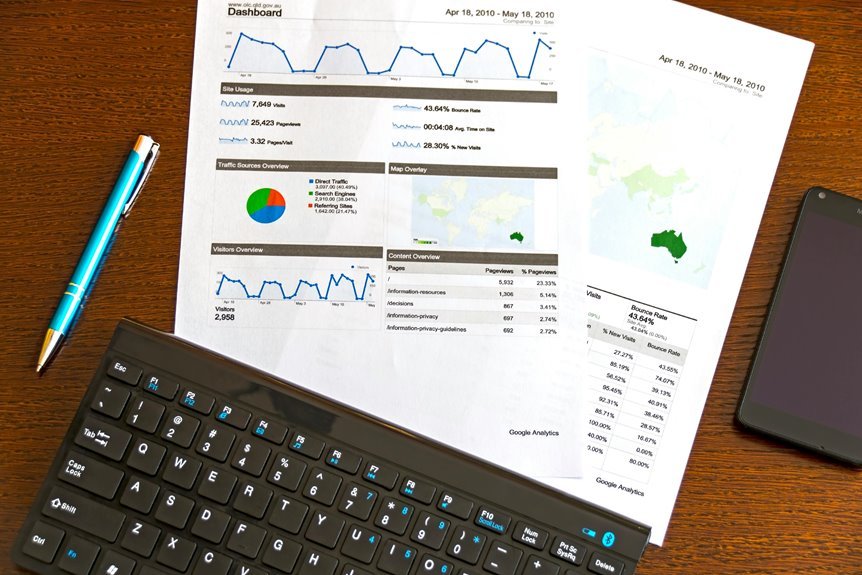
Financial Performance Dashboard: 8449861927, 8453023586, 8455203526, 8458362040, 8472578339, 8474911100

The financial performance dashboard serves as a critical asset for organizations aiming to optimize their financial strategies. By incorporating essential metrics, stakeholders can gauge the organization’s fiscal stability with precision. This tool not only highlights trends but also pinpoints discrepancies that may require attention. As companies strive for improved decision-making, the role of such dashboards becomes increasingly significant. What specific metrics and real-world examples can further illustrate their impact?
The Importance of Financial Performance Dashboards
Although financial performance dashboards are often regarded as mere tools for data visualization, their significance extends far beyond this superficial function.
They play a crucial role in enhancing decision making by providing real-time insights into financial health. These dashboards empower stakeholders to analyze trends, identify anomalies, and make informed choices, ultimately fostering a culture of strategic thinking and responsiveness within organizations seeking autonomy in their financial pursuits.
Key Metrics to Include in Your Dashboard
Financial performance dashboards require a careful selection of key metrics to effectively convey the financial health of an organization.
Essential components include key performance indicators (KPIs) such as revenue growth, profit margins, and return on investment.
Additionally, financial ratios like current ratio and debt-to-equity ratio provide insights into liquidity and financial stability, enabling informed decision-making and a clearer understanding of organizational performance.
Real-World Examples of Dashboard Impact
While many organizations invest in financial performance dashboards, the true impact of these tools often becomes evident through real-world case studies.
Dashboard success stories highlight significant improvements in decision-making and strategic planning. For instance, companies leveraging visual data impact have reported enhanced operational efficiency and increased revenue, demonstrating how effective dashboards can drive organizational success and empower stakeholders to make informed choices.
Conclusion
In conclusion, financial performance dashboards are not just tools; they are the compass guiding organizations through the stormy seas of financial uncertainty. By integrating key metrics and enabling real-time insights, these dashboards transform data into strategic advantages, illuminating paths to growth and efficiency. Their impact, evidenced by real-world examples, underscores the necessity of continuous monitoring and customization. Ultimately, organizations that leverage these dashboards are not merely surviving; they are thriving in an increasingly competitive landscape.